What Cardio Actually Does to Your Heart: The Adaptations Worth Training For
The heart is a muscle that trains like one — growing stronger, more efficient and measurably different with cardio — and knowing WHAT adapts makes the training more motivating than any calorie count. The engine-building guide: the adaptations, the timeline and the mix.

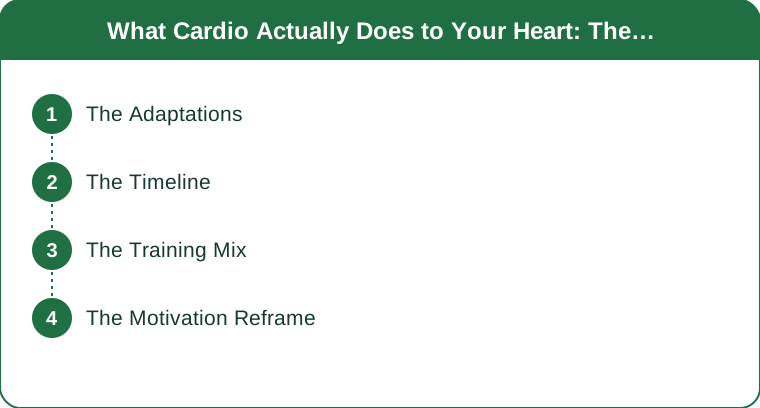
The Adaptations
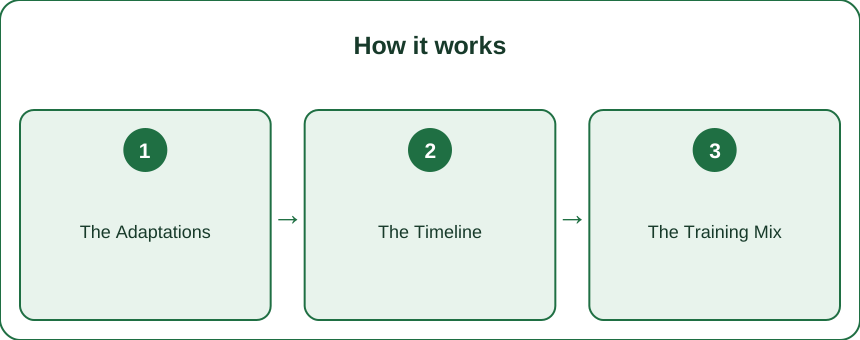
What actually changes: the stroke-volume upgrade (the trained heart pumps more per beat — the efficiency gain behind the falling resting heart rate; the same work at fewer beats is fitness, quantified), the resting-heart-rate story (the number that drops as fitness builds — the wearable trend from the fittech chapter that means the engine upgraded; athletes’ famously low resting rates are adaptation, not anomaly), the capillary-and-mitochondria expansion (the delivery network and the cellular engines multiplying — the zone-2 training’s specialty; the adaptations that make everything feel easier), the blood-volume increase (the plasma expansion that improves everything from heat tolerance to recovery), and the recovery-rate improvement (the heart-rate drop after effort — the fitness marker your watch tracks; the faster the fall, the fitter the system).
The Timeline
When adaptations arrive: the early wins (weeks one-to-four — the blood-volume and neurological gains that make week three feel easier than week one; the encouragement physiology of every couch-to-5K), the middle build (months two-to-six — the stroke-volume and capillary adaptations compounding; the resting heart rate visibly trending; the same route at the same heart rate getting faster, per the fittech progress receipts), the long game (years — the full engine remodel of the consistently-training; the aging-heart research showing trained hearts staying functionally younger by measurable margins), and the use-it-or-lose-it honesty (adaptations fade over weeks-to-months of stopping — the comeback chapter’s kind math applies to hearts too; the maintenance dose that keeps the engine is smaller than the dose that built it).

The Training Mix
Building the whole engine: the zone-2 base (the conversational-pace volume that builds the aerobic infrastructure — most of the week’s cardio minutes; the IWT and easy-run chapters’ territory), the interval spice (the hard-effort minutes that push the ceiling — the VO2-adjacent work once-or-twice weekly; the stair-snacks and hill repeats counting fully), the strength-training partner (the resistance work that the heart guidelines now co-prescribe — the muscle that assists the engine and the BP benefits from the pressure chapter), the consistency principle (the engine adapts to the pattern, not the heroic session — four moderate weeks beat one epic one, always), and the dose honesty (the guidelines’ 150 weekly moderate minutes is the health floor — the engine keeps adapting well beyond it, with diminishing-but-real returns; the walking floor plus two harder sessions covers most hearts beautifully).
The Motivation Reframe
Training for the engine: the metrics that mean something (the resting heart rate trend, the recovery rate, the same-route-easier test — the adaptation dashboard that beats calorie counts for meaning; the numbers that say the heart itself changed), the symptom-awareness note (the chest-pain, unusual-breathlessness and fainting tier during exercise is doctor-now territory — the engine light that never gets trained through; exercise is heart medicine AND hearts deserve check- engine respect), the age-and-start honesty (the adaptations arrive at every starting age — the never-too-late literature’s cardiac chapter is emphatic; the sixty-year-old’s heart remodels too), and the identity frame (every session is engine investment — the cardio that felt like calorie penance reframed as literally rebuilding your heart’s architecture; the strongest muscle in the body, trained on purpose). Beat by beat, week by week: the engine, upgraded.
Stroke volume up, resting rate down, zone-2 builds the base and intervals raise the ceiling. Cardio remodels the heart itself — train the engine and watch the dashboard prove it.
Keep Reading
This article is for general informational purposes only and is not medical advice. Always consult a qualified health professional for guidance specific to you.