Your Resting Heart Rate: The Free Health Metric Hiding on Your Wrist
Buried in your fitness tracker’s menus is the most underrated health metric it measures: resting heart rate. It tracks fitness, flags stress and illness, and trends more honestly than almost any number on the device. Here is how to read your heart’s idle speed.

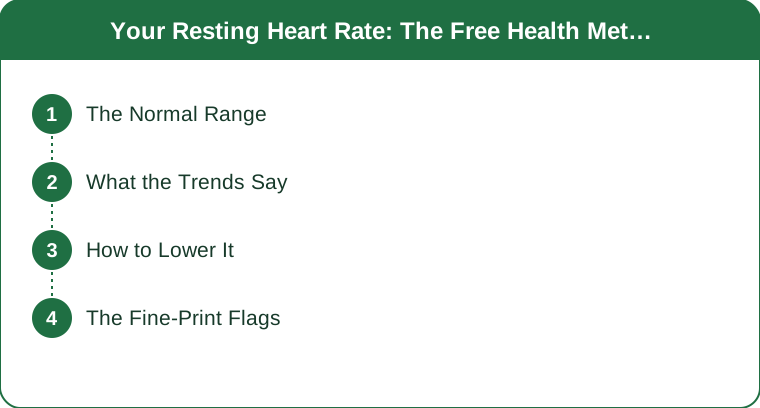
The Normal Range
Adult RHR typically runs 60-100, with fitter hearts idling lower (a trained heart pumps more per beat and needs fewer). The low 50s in endurance-trained women: normal. Context matters more than the raw number — YOUR baseline is the instrument.
What the Trends Say
A gradually FALLING baseline over training months is fitness arriving — the classic cardio adaptation. A suddenly ELEVATED morning RHR (5-10 beats over baseline) flags something: incoming illness, poor sleep, overtraining, dehydration or stress. The wrist notices before you do.

How to Lower It
The levers, in order: regular cardio (Zone 2 especially — the aerobic base literally rebuilds the idle speed), sleep consistency, stress management (chronic cortisol keeps the engine revving), hydration, and easing stimulant excess. Months of walking measurably lowers idle.
The Fine-Print Flags
Persistent RHR above 100, below 50 without training history, or palpitations and dizziness alongside any number: clinician territory, promptly. The metric is a dashboard light, not a diagnosis — but dashboards exist to be glanced at, weekly, with morning coffee.
Learn your baseline, respect elevation spikes, lower it with Zone 2 and sleep. The wrist was already collecting your heart’s diary — reading one number weekly turns it into an early-warning system that costs nothing.
Keep Reading
This article is for general informational purposes only and is not medical advice. Always consult a qualified health professional for guidance specific to you.