Why Your Heart Rate Drops in the Pool but Not on the Run
Quick Answer: Your heart rate really is lower in the pool - typically 10 to 15 beats per minute below the same effort on land - and it is not because swimming is easier. Three things stack up: the mammalian dive reflex triggered by cold water on your face, the horizontal body position that makes blood return to the heart almost free, and water pressure squeezing your limbs. Your effort is real. Your zones just need a separate set of numbers.
So if you swim by the same heart rate targets you run by, you will push yourself far harder than you meant to - and then wonder why the rest of your week falls apart.

Why is my heart rate lower when swimming at the same effort?
Because three separate mechanisms all push in the same direction, and they are physical, not psychological.
The dive reflex. Cold water on the face - specifically around the nostrils and forehead - triggers a reflex shared by every air-breathing mammal. Heart rate drops within seconds of face immersion, blood vessels in the limbs narrow, and circulation prioritises the heart and brain. The effect is stronger in colder water and stronger when you actually put your face in, which is why freestyle shows it more than a heads-up breaststroke.
The horizontal position. On land, your heart fights gravity to pull blood up from your legs. Lying flat, that work disappears. More blood returns to the heart per beat, so each beat moves more volume - and a heart moving more per beat does not need to beat as often for the same output. This is the same reason your heart rate is lower lying in bed than sitting up.
Water pressure. At chest depth, water is pressing on your legs and torso from every direction, which pushes blood centrally. It works like a full-body compression garment you did not have to put on.
Add them together and a hard swim can sit at 140 bpm while an equally hard run sits at 155. Nothing is broken.
Does this mean swimming is a worse workout?
No, and this is the misread that causes people to swim too hard.
Heart rate is a proxy for effort, not effort itself. What actually drives adaptation is the demand on your muscles and your oxygen system, and swimming loads both heavily - it recruits far more upper body than running does and adds a breathing constraint that no land sport has.
What to watch instead in the pool:
- Pace per 100 metres. This is the swimming equivalent of running pace, and it is honest. Time yourself.
- Stroke count per length. When it climbs, you are fatiguing, regardless of what your watch says.
- Breathing pattern. Dropping from breathing every three strokes to every two is a clear intensity signal.
- How long the set takes to recover from. Two minutes to feel normal again is a hard set no matter the number.
A useful shortcut: subtract roughly 10 to 13 beats from your running zones to get a starting point for swim zones, then refine with a proper pool test. A 400 metre time trial gives you a threshold pace far more useful than any heart rate figure.
Myth vs Fact: Swimming Heart Rate
Myth: A low heart rate in the pool means you are not working hard enough. Fact: It means you are horizontal and your face is wet. Judge effort by pace and stroke count, not the watch.
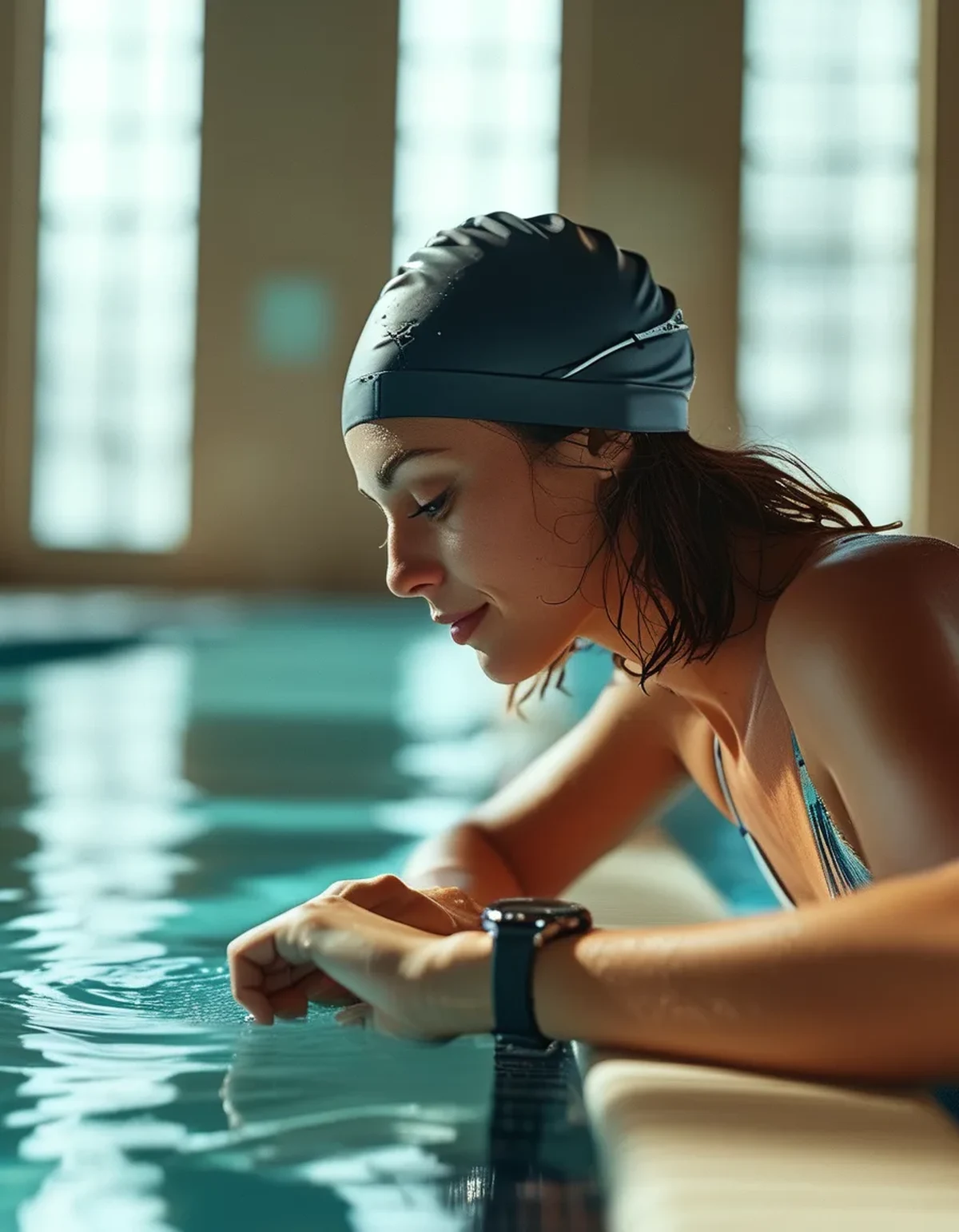
Myth: Wrist heart rate monitors work fine in the water. Fact: Optical wrist sensors are notoriously unreliable while swimming. Water gets between the sensor and skin, and the constant wrist rotation of freestyle wrecks the signal. Many of the wild readings people report are measurement error, not physiology. A chest strap with swim memory is the only reliable option.
Myth: Cold water makes your heart rate go up, not down. Fact: Both happen, in that order. The initial cold shock spikes heart rate and breathing for the first 30 to 60 seconds, then the dive reflex takes over and it settles lower than baseline. If you judge your swim by the first minute, you get the exact opposite picture.
Myth: The effect fades once you are warmed up. Fact: The horizontal position and water pressure do not go anywhere. The gap narrows a little as you heat up, but it never closes.
Why does my heart rate stay high after I get out?
Getting out of the pool reverses everything at once, and it is a bigger jolt than most people expect.
You stand up, gravity returns, and all that centrally pooled blood drops back into your legs in seconds. Your heart compensates by beating faster - which is why the walk from the pool to the changing room can feel oddly light-headed after a hard session, especially in a warm pool.
How to make the transition easier:
- Do not sprint the last 50 and then leap out. Swim two easy lengths first so your circulation is not at peak demand when you stand.
- Sit on the edge for 30 seconds before standing fully, particularly after a long or hot session.
- Rehydrate deliberately. You sweat in the pool and never notice it, and a dehydrated swimmer gets the dizziness far worse. A 45 minute session can cost half a litre or more.
- Watch the hot tub habit. Going straight from a hard swim into hot water stacks two circulatory challenges and is the single most common cause of pool-deck faintness.
If you regularly feel genuinely faint, or your heart pounds or flutters irregularly rather than simply beating fast, that is worth mentioning to a doctor rather than filing under normal. This is general information, not medical advice.
FAQ: Swimming Heart Rate Questions, Answered
Should I build separate heart rate zones for swimming?
Yes, if you use heart rate at all. Take your running or cycling zones and shift them down about 10 to 13 beats as a first draft, then correct with pool testing. Using land zones in the water reliably pushes swimmers into hard efforts they logged as easy.
Why is my heart rate lower in open water than in the pool?
Usually temperature. Open water is typically colder, so the dive reflex is stronger, and the effect is most pronounced in the first few minutes. The flip side is that cold-shock breathing at the start can make an easy swim feel frantic - give yourself five minutes before judging anything.
Is a very low swim heart rate ever a problem?
A low number at moderate effort is normal physiology. Sudden unexplained changes, dizziness, chest discomfort, or an irregular rhythm are different and should be checked by a professional rather than explained away by the dive reflex.
TL;DR:
- Swimming heart rate runs about 10 to 15 bpm below land effort - dive reflex, horizontal position, and water pressure all stack
- The low number does not mean an easy workout; it means the measurement changed, not the effort
- Judge pool effort by pace per 100, stroke count, and breathing pattern instead
- Wrist optical sensors are unreliable in water - use a chest strap or ignore the number
- Ease out of the pool and rehydrate; standing up reverses the whole effect at once
The most useful thing you can do this week is stop comparing the two numbers. Give swimming its own set of targets and its own sense of what hard feels like, and the pool stops looking like a workout that does not count.
Keep Reading
This article is for general informational purposes only and is not medical advice. Always consult a qualified health professional for guidance specific to you.