What Heart Rate Variability Actually Tells You (That Resting Heart Rate Doesn't)
Quick Answer: Heart rate variability (HRV) measures the tiny time differences between individual heartbeats, reflecting how well your nervous system can shift between stress and recovery modes. Higher HRV generally signals better recovery and readiness; a single resting heart rate number can’t capture this nervous system flexibility at all.
Your tracker shows a resting heart rate of 58 and an HRV score that swings from 35 to 70 night to night — and only one of those numbers is actually telling you how recovered you are.

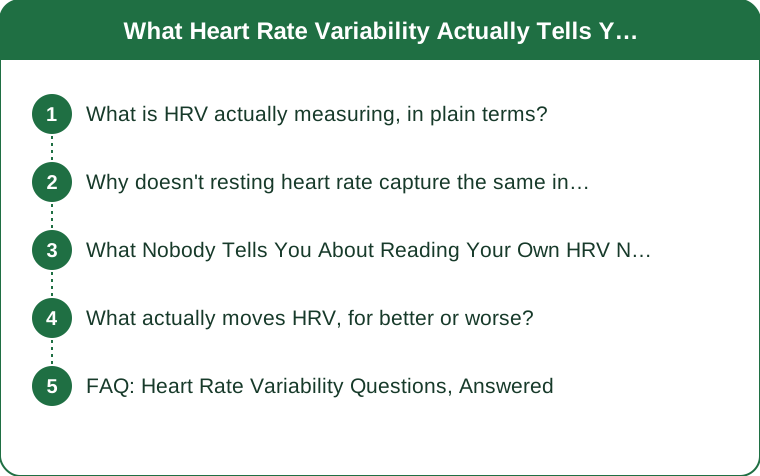
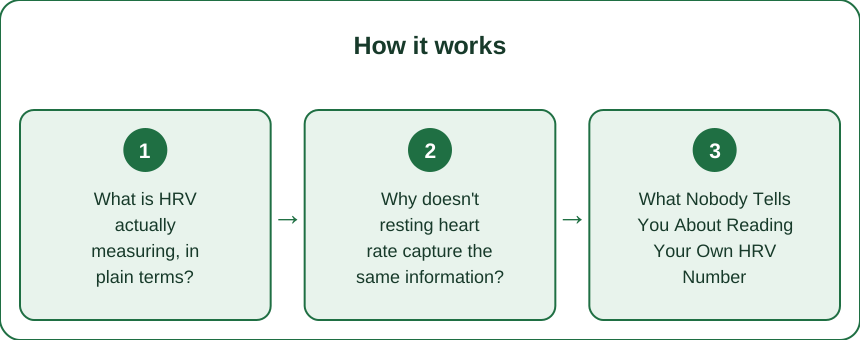
What is HRV actually measuring, in plain terms?
HRV measures the variation in time between each heartbeat, not the beats themselves. A healthy nervous system doesn’t beat like a metronome — it constantly makes micro-adjustments based on breathing, stress, digestion, and recovery state, and those micro-adjustments show up as variability.
Higher variability generally means your autonomic nervous system can shift flexibly between its ‘go’ mode (sympathetic) and ‘rest’ mode (parasympathetic) — a sign of good recovery capacity, not just a good heart.
Why doesn’t resting heart rate capture the same information?
Resting heart rate is a single average number — it tells you roughly how hard your heart is working at rest, but says nothing about your nervous system’s flexibility or your current recovery state. Two mornings with an identical resting heart rate of 55 can have completely different HRV scores, reflecting very different actual readiness levels.
This is why HRV is used for day-to-day training readiness, while resting heart rate is better for tracking longer-term cardiovascular fitness trends over months.

What Nobody Tells You About Reading Your Own HRV Number
Here’s the part trackers rarely explain clearly: your HRV number only matters relative to your own baseline, never as a standalone score compared to someone else’s. A ‘45’ might be excellent for one person and a clear low-recovery signal for another — population comparisons are close to meaningless.
What actually matters is your personal 7-day rolling average versus today’s reading. A noticeable dip below your own normal range — not the raw number — is the real signal worth acting on.
What actually moves HRV, for better or worse?
- Alcohol — even one drink can suppress HRV noticeably for that night and sometimes the next
- Poor or short sleep — one of the strongest, most consistent HRV suppressors
- Illness onset — HRV often drops before other symptoms appear, making it a useful early warning
- Consistent training and good sleep hygiene — the most reliable ways to raise your baseline over weeks to months
- Stress and overtraining — chronic elevated stress keeps HRV suppressed even with adequate sleep
FAQ: Heart Rate Variability Questions, Answered
Is a higher HRV number always better?
Generally yes for your own trend line, but it’s about consistency with your personal baseline rather than chasing an ever-higher single number.
How long does it take to establish a reliable HRV baseline?
Most trackers need 1-2 weeks of consistent morning measurements to establish a meaningful personal range — don’t over-interpret early readings before that.
Should you skip a workout based on a single low HRV reading?
One low reading is normal variation; a low reading combined with poor sleep and elevated resting heart rate together is a stronger signal to scale back that day’s intensity.
TL;DR:
- HRV measures the variability between heartbeats, reflecting nervous system flexibility, not just heart speed
- Resting heart rate is a single average number and misses this recovery-readiness signal entirely
- Compare your HRV only to your own baseline, never to population averages
- Alcohol, poor sleep, and illness onset suppress HRV; consistent training and sleep hygiene raise it over time
Keep Reading
This article is for general informational purposes only and is not medical advice. Always consult a qualified health professional for guidance specific to you.