What Your Resting Heart Rate Is Actually Telling You
Quick Answer: A normal resting heart rate falls between 60-100 beats per minute for most adults, and while a lower number within a healthy range often reflects good cardiovascular fitness, trends over time matter far more than any single day’s reading.
Resting heart rate gets treated like a fitness report card, but a single number without context can be misleading.

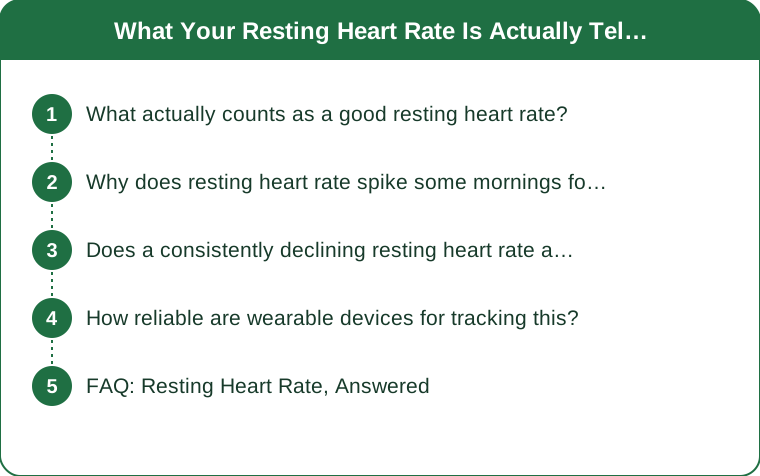
What actually counts as a good resting heart rate?
60-100 bpm is the standard normal range, with well-trained athletes sometimes seeing numbers in the 40s-50s due to a stronger, more efficient heart. But a number in the 70s or 80s isn’t automatically a red flag — genetics, age, and overall health all play a role.
Why does resting heart rate spike some mornings for no clear reason?
Poor sleep, dehydration, stress, illness onset, or alcohol the night before are the most common causes of a temporarily elevated resting heart rate. A single elevated reading usually isn’t concerning — it’s a pattern over several days that’s worth paying attention to.

Does a consistently declining resting heart rate always mean better fitness?
Usually, yes, when it’s trending down gradually alongside consistent cardio training — but a sudden, unexplained drop can occasionally signal something else worth mentioning to a doctor, particularly if paired with dizziness or fatigue.
How reliable are wearable devices for tracking this?
Modern fitness trackers and smartwatches are generally accurate for resting heart rate trends, even if occasional single readings can be a few beats off. Trend data over weeks is more useful and reliable than obsessing over daily fluctuations.
FAQ: Resting Heart Rate, Answered
When should you actually be concerned about your resting heart rate?
Consistently above 100 bpm (tachycardia) or below 60 bpm without an athletic training background, especially paired with symptoms like dizziness or shortness of breath, is worth discussing with a doctor.
Does caffeine affect resting heart rate readings?
Yes, caffeine can temporarily elevate heart rate for a few hours, which is why most guidance recommends measuring resting heart rate first thing in the morning, before coffee.
How long does it take for cardio training to lower resting heart rate?
Measurable changes typically show up after 8-12 weeks of consistent cardiovascular training, as the heart becomes more efficient at pumping blood per beat.
TL;DR:
- 60-100 bpm is the normal range, with lower often (not always) reflecting better fitness
- A single elevated reading is rarely concerning — trends over days and weeks matter more
- Poor sleep, dehydration, and stress are the most common causes of a temporary spike
- Measure first thing in the morning, before caffeine, for the most consistent readings
If you’re tracking this regularly, look at your weekly average rather than reacting to any single day’s number.
Keep Reading
This article is for general informational purposes only and is not medical advice. Always consult a qualified health professional for guidance specific to you.