What Your Resting Heart Rate Actually Tells You (and What It Doesn't)
Quick Answer: A resting heart rate of 60-100 bpm is considered normal for most adults, and lower numbers within a healthy range (50s-60s) often reflect good cardiovascular fitness. But a very low number paired with dizziness, or a rising trend over weeks, is worth a doctor’s attention rather than celebration.
Your smartwatch tells you 52 bpm this morning and you’re not sure if that’s a fitness win or a warning sign. Context matters more than the raw number.

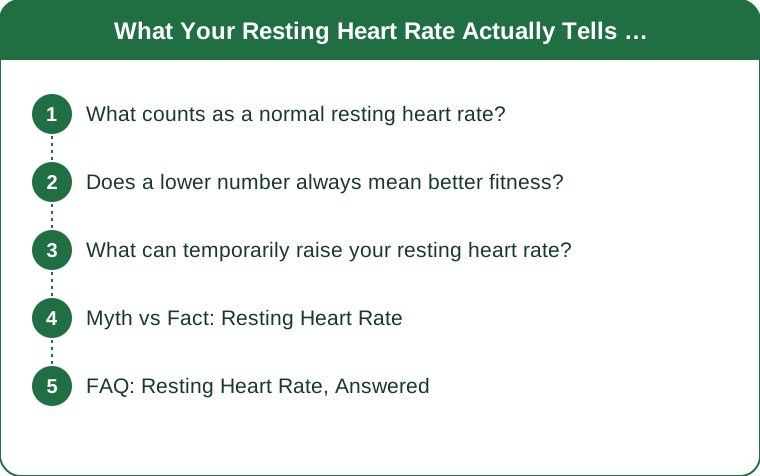
What counts as a normal resting heart rate?
For most adults, 60-100 beats per minute is the standard normal range, measured first thing in the morning before getting out of bed.
Well-trained endurance athletes commonly sit in the 40s-50s because a stronger heart pumps more blood per beat, needing fewer beats overall — this is a fitness adaptation, not a problem, in someone who feels fine.
Does a lower number always mean better fitness?
Generally, trending downward over months of consistent cardio training does reflect improving fitness. But a sudden drop with no training change, especially paired with fatigue, dizziness, or fainting, is a different situation entirely and should prompt a doctor visit rather than a fitness high-five.
The direction and context of the trend matter more than any single number.

What can temporarily raise your resting heart rate?
Poor sleep, dehydration, stress, illness, caffeine, and alcohol can all bump your resting heart rate by 5-15 bpm the next morning. A single elevated reading after a rough night usually isn’t meaningful — a week-long upward trend is more worth noting than one bad morning.
Myth vs Fact: Resting Heart Rate
Myth: Lower is always healthier, no matter how low. Fact: Under 40 bpm without an athletic background, or paired with symptoms, needs medical evaluation — it can indicate a heart rhythm issue rather than fitness.
Myth: One high reading means something is wrong. Fact: A single elevated morning reading after poor sleep or a stressful day is common and not concerning on its own.
Myth: Resting heart rate is only about cardio fitness. Fact: Sleep quality, hydration, stress, thyroid function, and medications all influence it too.
FAQ: Resting Heart Rate, Answered
What time of day should I check resting heart rate?
First thing in the morning, before getting out of bed, gives the most consistent reading for tracking trends over time.
Can stress alone raise resting heart rate long-term?
Chronic stress can keep it elevated by several beats per minute over time through sustained cortisol and sympathetic nervous system activity.
When should I actually see a doctor about it?
If it’s consistently above 100 or below 50 at rest without an athletic explanation, or comes with dizziness, chest discomfort, or fainting — see a professional rather than waiting it out.
TL;DR:
- Normal range is 60-100 bpm; trained athletes often run lower in the 40s-50s
- A gradual downward trend with training usually reflects fitness, not risk
- Sleep, stress, caffeine, and illness can temporarily shift the number
- Sudden extreme changes or symptoms warrant a doctor, not just tracking
This is general information, not medical advice — track your trend, not just one morning’s number.
Keep Reading
This article is for general informational purposes only and is not medical advice. Always consult a qualified health professional for guidance specific to you.