What Actually Changes Your Resting Heart Rate (and What Doesn't Matter as Much)
Quick Answer: Cardiovascular fitness, sleep quality, hydration, stress, caffeine, and illness all meaningfully move resting heart rate — often by more than day-to-day fitness changes would. A single day’s reading is a noisy snapshot; trends over weeks are far more meaningful than any one number.
A lower resting heart rate gets treated as a fitness scoreboard, and consistent cardio training genuinely does lower it over time — but several other everyday factors move the number just as much, which is why obsessing over a single morning’s reading is often misleading.

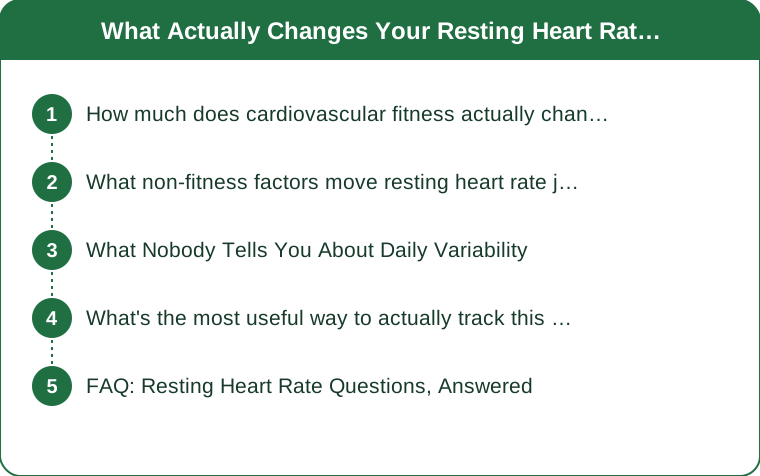
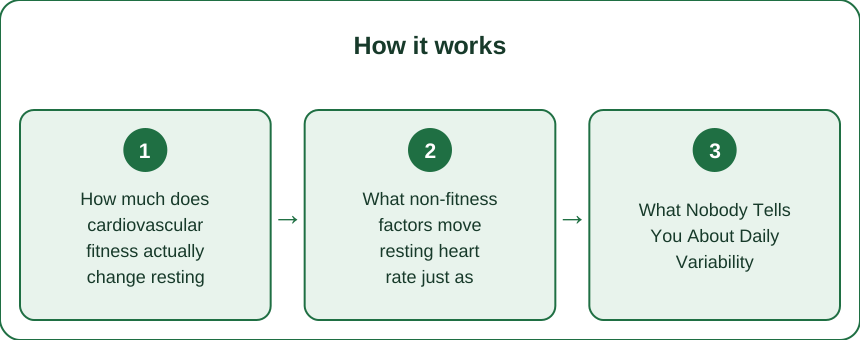
How much does cardiovascular fitness actually change resting heart rate?
Consistent aerobic training does lower resting heart rate over time, since a stronger, more efficient heart pumps more blood per beat, needing fewer beats per minute at rest. This is a real, well-documented adaptation, but it typically takes weeks to months of consistent training to show a measurable shift, not days.
Elite endurance athletes often have notably low resting heart rates as a direct result of this adaptation, but the change happens gradually and isn’t the only major influence on the number.
What non-fitness factors move resting heart rate just as much?
Sleep quality and hydration status can shift resting heart rate by several beats per minute night to night — poor sleep or mild dehydration commonly elevates it temporarily, independent of actual fitness level.
Stress, caffeine intake, and illness (even a mild cold before symptoms feel obvious) are also common, significant single-day movers — a resting heart rate reading the morning after a stressful day or a poor night’s sleep can look notably worse than your real trend, without fitness having changed at all.

What Nobody Tells You About Daily Variability
Here’s what most fitness tracker marketing glosses over: a single day’s resting heart rate reading can vary by 5-10 beats per minute from your true baseline due to sleep, hydration, stress, and even room temperature — meaning one ‘bad’ reading is rarely meaningful on its own.
The metric that actually matters for tracking real fitness change is a rolling multi-week average, not any individual morning’s number, since the noise from daily factors can easily mask or mimic a real trend.
What’s the most useful way to actually track this metric?
- Look at weekly or monthly averages rather than single-day readings
- Note major life factors (illness, poor sleep, high stress, heavy caffeine) alongside readings to explain outliers rather than treating every fluctuation as meaningful
- Take readings under consistent conditions (same time, same position, ideally right after waking) to reduce measurement noise
- Expect a gradual downward trend from consistent training, not a rapid week-to-week change
FAQ: Resting Heart Rate Questions, Answered
What’s considered a normal resting heart rate range?
Most adults fall between 60-100 beats per minute, with well-trained endurance athletes sometimes in the 40s-50s — but ‘normal’ varies significantly by individual and fitness history.
Should I be concerned about a single high reading?
Generally not on its own — check for recent poor sleep, stress, caffeine, dehydration, or illness first; a persistent elevation over multiple weeks is more worth discussing with a doctor.
How long does it take training to lower resting heart rate?
Most people see a measurable shift over 6-12 weeks of consistent aerobic training, though individual response time varies.
TL;DR:
- Cardiovascular fitness genuinely lowers resting heart rate, but over weeks to months, not days
- Sleep, hydration, stress, caffeine, and illness all move the number just as much day to day
- A single reading is noisy — multi-week trends are what actually reflect real change
- Consistent measurement conditions and tracking context (sleep, stress) make the metric far more useful
One rough morning’s number isn’t a fitness verdict — the trend over weeks is the part actually worth watching.
Keep Reading
This article is for general informational purposes only and is not medical advice. Always consult a qualified health professional for guidance specific to you.