What Actually Changes Your Resting Heart Rate (It's Not Just Cardio Fitness)
Quick Answer: Resting heart rate is shaped by cardio fitness, but also sleep quality, hydration, stress, caffeine, and even room temperature — all in the same night. A single day’s reading swinging 5-8 bpm is normal and rarely means your fitness changed.
Your tracker shows your resting heart rate jumped 6 points overnight and your first thought is “did I lose fitness?” Almost certainly not — fitness doesn’t change that fast, but a lot of other things do.

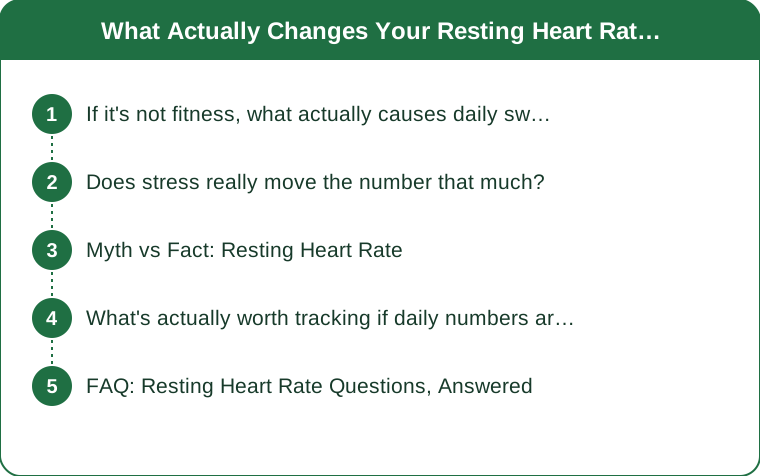
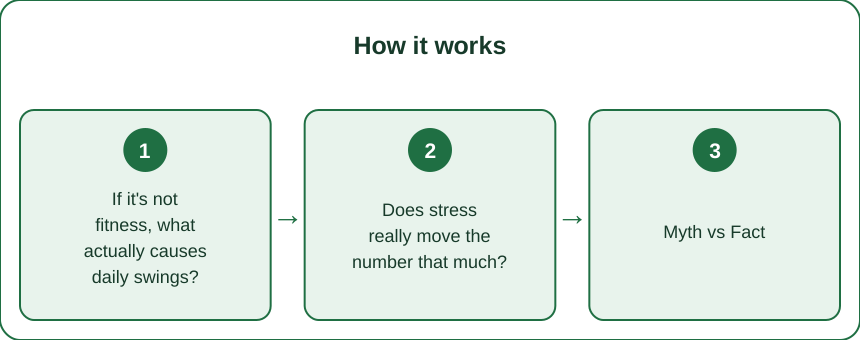
If it’s not fitness, what actually causes daily swings?
Sleep quality is one of the biggest single-night factors — a poor night’s sleep, even without less total sleep time, can raise resting heart rate by several beats the next morning as the nervous system stays more activated.
Hydration status matters too — even mild dehydration (losing just 1-2% of body water) makes the heart work slightly harder to maintain blood volume, nudging resting rate up measurably.
Does stress really move the number that much?
Yes, meaningfully. Psychological stress keeps the sympathetic nervous system slightly activated, even at rest, which is reflected directly in a higher resting heart rate — this is part of why a stressful week at work can show up on a fitness tracker before you consciously feel it.
Alcohol has a similar, often stronger effect — resting heart rate commonly rises 5-10+ bpm the night after drinking, which is one of the most consistent single-factor spikes people see in their own data.

Myth vs Fact: Resting Heart Rate
Myth: A lower number is always better, no exceptions. Fact: an unusually low resting heart rate combined with dizziness or fatigue can actually signal a problem — context matters more than the raw number.
Myth: One high reading means your fitness dropped. Fact: single-day swings from sleep, stress, or alcohol are common and don’t reflect a real fitness change — trends over weeks matter, not one morning.
Myth: Only cardio exercise lowers resting heart rate over time. Fact: strength training and consistent sleep both contribute meaningfully to lower resting heart rate over months, not just running or cycling.
What’s actually worth tracking if daily numbers are so noisy?
A 7-day rolling average smooths out the daily noise from sleep and stress, and is a far better signal of real fitness or health trends than any single morning’s number.
If you see a sustained rise over 2+ weeks, not explained by an obvious factor like illness or major stress, that’s worth paying attention to or mentioning to a doctor — a single off day almost never is.
FAQ: Resting Heart Rate Questions, Answered
What’s considered a normal resting heart rate range?
Most healthy adults fall between 60-100 bpm, with well-trained individuals often lower, in the 40s-50s — but the trend matters more than hitting a specific number.
Why is my resting heart rate higher in warmer weather?
Heat makes the heart work harder to help regulate body temperature and manage blood flow to the skin, which is a normal, temporary seasonal effect.
Should one bad night’s sleep worry me if my heart rate spikes?
No — that’s an expected, temporary response. It becomes worth attention only if it persists well beyond the poor sleep itself.
TL;DR:
- Sleep, hydration, stress, and alcohol all move resting heart rate day to day, not just fitness
- A single reading swinging 5-8 bpm is normal noise, not a fitness change
- Track a 7-day rolling average instead of reacting to one morning
- A sustained rise over 2+ weeks with no clear cause is the actual signal worth checking
Your tracker’s daily number is telling you about last night, not your fitness level — the trend is the part that actually matters.
Keep Reading
This article is for general informational purposes only and is not medical advice. Always consult a qualified health professional for guidance specific to you.