What Actually Moves Your Resting Heart Rate Week to Week (It's Not Just Fitness)
Resting heart rate gets treated as a pure fitness scoreboard, so a higher reading on a given morning tends to trigger fitness anxiety. But most day-to-day movement in that number has nothing to do with fitness level at all. This is general information, not medical advice.

Why Fitness Isn’t the Main Driver Day to Day
The bigger factors: the the-sleep-quality-impact (poor sleep quality or a shortened sleep window measurably raising resting heart rate the following morning, often by more than a week of missed training would), the the-hydration-status-effect (mild dehydration increasing resting heart rate as the heart compensates for reduced blood volume, independent of any change in cardiovascular fitness), the the-stress-and-illness-signal (elevated stress hormones or an oncoming illness reliably raising resting heart rate before any other symptom appears, which is why the number is often a useful early signal, not just a fitness score).

Reading the Number Correctly
The interpretation approach: the the-trend-over-single-reading (looking at the trend over one to two weeks rather than reacting to any single morning’s number, since day-to-day swings from sleep, hydration, and stress are normal and don’t reflect fitness loss), the the-context-matters-more-than-the-number (a single elevated reading meaning very little without context — recent sleep, alcohol, illness, or stress — attached to it), the the-fitness-signal-is-slow (genuine fitness-driven changes in resting heart rate happening over months of consistent training, not week to week, which is why week-to-week jumps are almost never a fitness story).
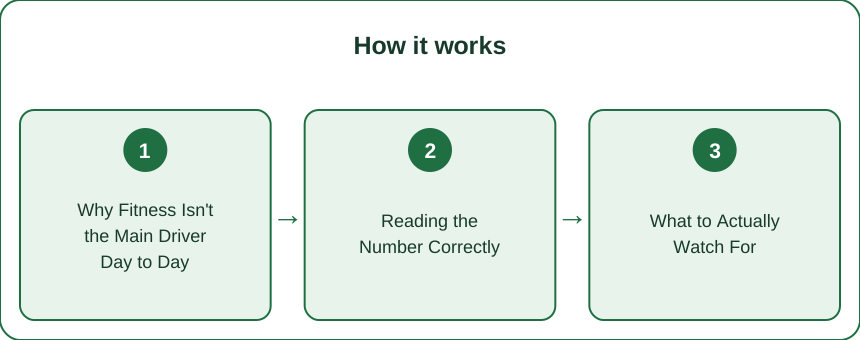
What to Actually Watch For
The practical takeaway: the the-consistent-upward-trend-matters (a sustained upward trend over several weeks being more worth attention than any single elevated morning reading), the the-track-the-context-alongside (logging sleep and stress alongside heart rate data making the number far more interpretable than looking at it in isolation), and the frame (a single high resting heart rate morning is almost always sleep, hydration, or stress, not lost fitness)). This is general information, not medical advice.
A single higher-than-usual resting heart rate reading tends to trigger fitness anxiety, but most day-to-day movement in that number has little to do with fitness level at all — poor sleep quality can raise it more than a week of missed training would, mild dehydration raises it as the heart compensates for reduced blood volume, and elevated stress or an oncoming illness will reliably show up in the number before any other symptom does. The number is far more useful read as a trend over one to two weeks than reacted to on any single morning, since genuine fitness-driven changes happen over months of consistent training, not week to week. Logging sleep and stress alongside the heart rate data makes a single reading far more interpretable than looking at it in isolation. What Actually Moves Your Resting Heart Rate Week to Week (It’s Not Just Fitness) comes down to sleep, hydration, and stress doing most of the daily work. This is general information, not medical advice.
Keep Reading
This article is for general informational purposes only and is not medical advice. Always consult a qualified health professional for guidance specific to you.