Why Your Resting Heart Rate as a Single Number Can Be Genuinely Misleading
A single resting heart rate reading gets treated as a clean, meaningful health data point, when it’s actually more useful as part of a trend than as any one isolated number, given how much legitimate day-to-day variation is completely normal. Here are the specific factors that cause that variation and how to actually use the metric correctly.

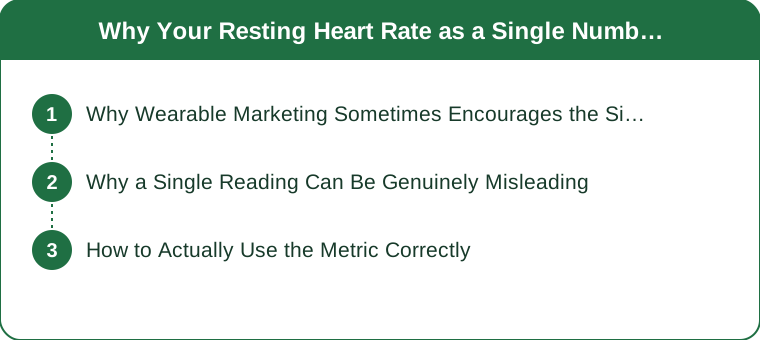
Why Wearable Marketing Sometimes Encourages the Single-Number Habit Anyway
The commercial incentive: the a-prominent-daily-number-on-a-devices-home-screen-encourages-daily-checking-and-engagement-regardless-of-whether-that-single-number-is-actually-meaningful (the prominent display of a single daily number on a wearable’s home screen encouraging frequent checking and engagement with the app, a commercial incentive that exists somewhat independent of whether that single number is actually the most meaningful way to use the data, per the fitness-tracker-obsession-guide logic — the prominent-display-of-a-single-daily-number-encouraging-frequent-app-checking-and-engagement-exists-somewhat-independent-of-whether-that-number-is-actually-the-most-meaningful-way-to-use-the-data), and the frame (the commercial incentive as a reason the single-number framing persists in how these devices present data, even though trend-based interpretation is the more accurate way to actually use it).

Why a Single Reading Can Be Genuinely Misleading
The variation sources: the sleep-quality-the-night-before-measurably-affects-the-next-mornings-resting-heart-rate-independent-of-any-actual-health-change (the prior night’s sleep quality, per the resting-heart-rate-guide logic, measurably affecting the following morning’s resting heart rate reading independent of any actual underlying cardiovascular health change, meaning a single elevated reading might just reflect a rough night’s sleep — the prior-nights-sleep-quality-measurably-affecting-the-next-mornings-reading-independent-of-any-actual-underlying-health-change-means-a-single-elevated-reading-might-simply-reflect-a-rough-nights-sleep), the the-hydration-status-alcohol-and-recent-caffeine-timing-all-independently-shift-a-single-mornings-reading (the hydration level, recent alcohol consumption, and caffeine timing all independently capable of shifting a single morning’s reading without reflecting any change in actual cardiovascular fitness or health, per the cardio-heart-adaptations-guide logic — the hydration-recent-alcohol-and-caffeine-timing-all-independently-capable-of-shifting-a-single-mornings-reading-without-reflecting-any-actual-change-in-cardiovascular-fitness-or-health), the the-measurement-conditions-and-device-accuracy-add-further-noise-to-any-single-isolated-reading (the specific measurement conditions and the accuracy limitations of consumer wearable devices adding a further layer of noise to any single isolated reading, per the fitness-tracker-accuracy-guide logic — the specific-measurement-conditions-and-consumer-wearable-device-accuracy-limitations-adding-a-further-layer-of-noise-to-any-single-isolated-reading), and the reframe (the day-to-day variation as real and expected from multiple independent sources, meaning a single reading is a noisy snapshot rather than a clean, reliable health signal on its own).
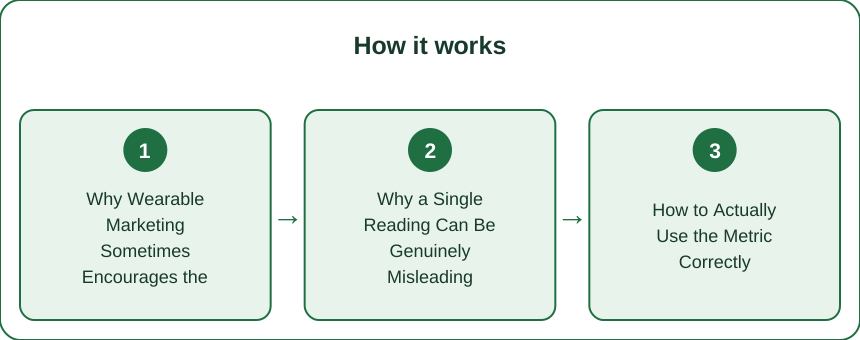
How to Actually Use the Metric Correctly
The practical approach: the track-the-trend-over-several-weeks-rather-than-reacting-to-any-single-days-number (the following the general trend direction across several weeks being considerably more meaningful and reliable than reacting to any single day’s specific number, since trend smooths out the various sources of day-to-day noise, per the heart-rate-recovery-guide logic — the following-the-general-trend-direction-across-several-weeks-being-considerably-more-meaningful-than-reacting-to-any-single-days-number-since-trend-smooths-out-the-various-noise-sources), the the-measure-under-consistent-conditions-to-reduce-some-but-not-all-of-the-variation-sources (the measuring at a consistent time and under consistent conditions — same time of morning, before caffeine — reducing some of the measurement noise, even though sleep quality and other factors will still introduce real variation beyond what consistent timing alone can control, per the exercise-and-blood-pressure-guide logic — the measuring-under-consistent-conditions-reduces-some-measurement-noise-even-though-sleep-quality-and-other-factors-will-still-introduce-real-variation-beyond-what-consistent-timing-alone-can-control), the the-a-single-notably-elevated-reading-with-a-clear-explanation-like-poor-sleep-or-alcohol-isnt-worth-independent-alarm (the a single unusually elevated reading that has an obvious, identifiable explanation from the known variation sources not warranting independent worry on its own, distinct from a genuinely unexplained sustained shift in the overall trend, echoing the womens-heart-health-awareness-guide logic — the a-single-unusually-elevated-reading-with-an-obvious-identifiable-explanation-from-known-variation-sources-not-warranting-independent-worry-distinct-from-a-genuinely-unexplained-sustained-shift-in-the-overall-trend), and the frame (the correct use as tracking trend over several weeks rather than reacting to single-day numbers, measuring under consistent conditions to reduce some noise, and not treating a single explainable elevated reading as independently alarming — using the metric the way it actually provides useful information, as a trend indicator rather than a daily verdict).
A single resting heart rate reading can be genuinely misleading because legitimate day-to-day variation comes from multiple independent sources — prior night’s sleep quality measurably affects the following morning’s reading independent of any actual cardiovascular health change, hydration status, recent alcohol, and caffeine timing each independently shift a single morning’s number, and measurement conditions plus consumer wearable device accuracy limitations add further noise on top of all that. Using the metric correctly means following the general trend direction across several weeks rather than reacting to any single day’s number, since trend smooths out the various sources of noise, measuring under consistent conditions like the same time each morning before caffeine to reduce some but not all of the variation, and not treating a single notably elevated reading that has an obvious explanation like poor sleep or alcohol as independently alarming, distinct from a genuinely unexplained sustained shift in the overall trend.
Keep Reading
This article is for general informational purposes only and is not medical advice. Always consult a qualified health professional for guidance specific to you.