Why Your Watch and Your Ring Never Agree on Your Resting Heart Rate
Quick Answer: Wrist and finger-worn devices use slightly different sensor placement, algorithms, and measurement windows, which produces small but real differences in resting heart rate readings. Neither is necessarily wrong — what matters more is tracking the trend on one consistent device over time rather than chasing agreement between two.
Your watch says 58, your ring says 52, and you check twice a day trying to figure out which number is the real one.
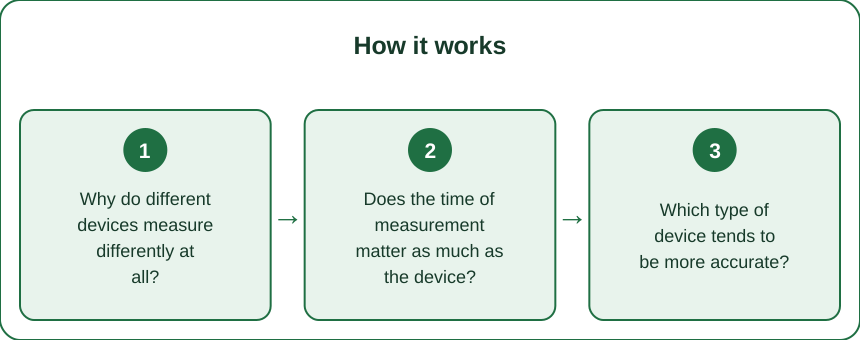
Why do different devices measure differently at all?
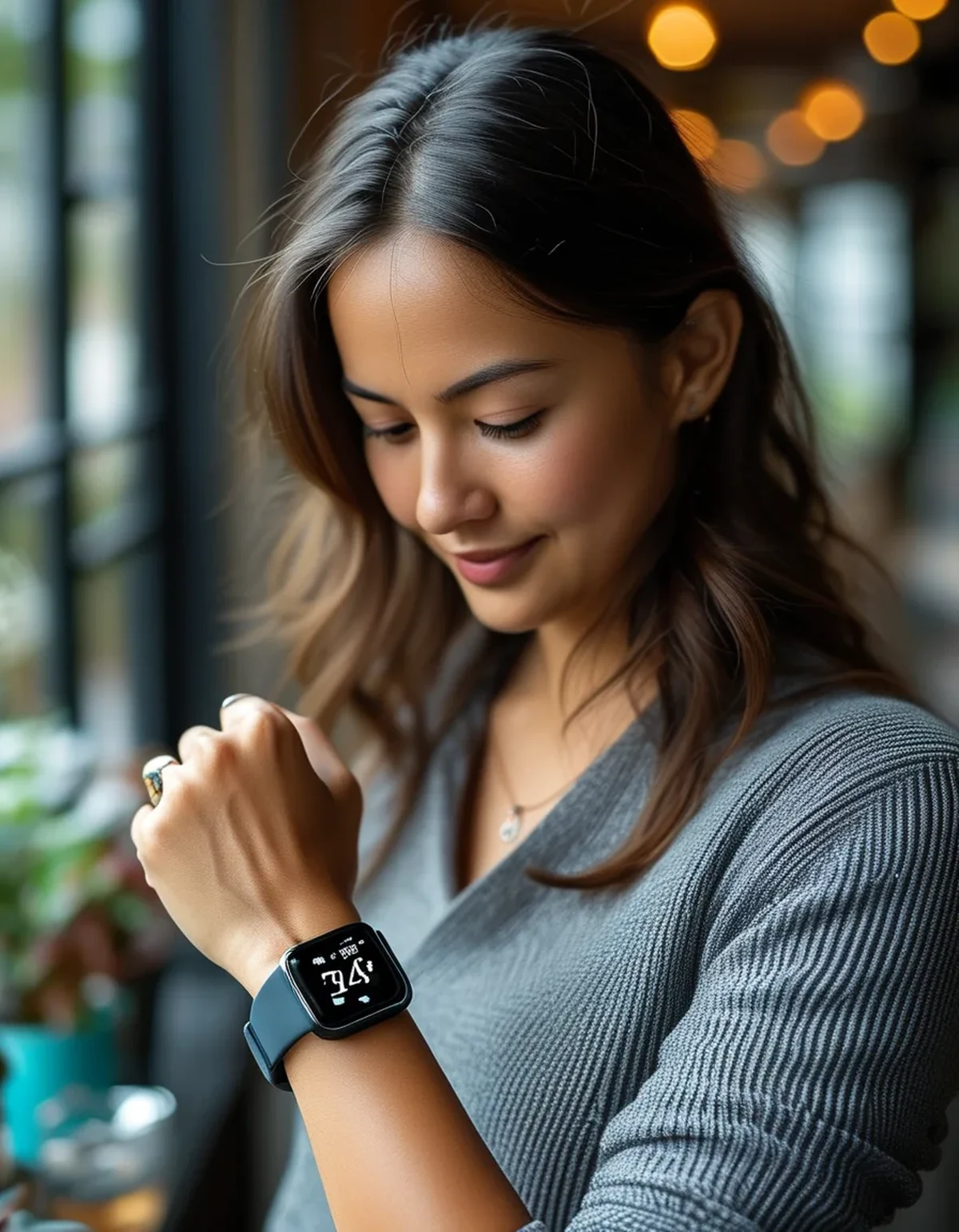
Wrist-worn devices sit over an area with more motion and variable blood flow, while finger-worn rings sit over arteries closer to the skin’s surface with generally more stable blood flow, which can produce a lower, sometimes more accurate baseline reading. Sensor placement alone can account for several beats per minute of difference between device types.
Does the time of measurement matter as much as the device?
Yes — resting heart rate naturally fluctuates through the night and morning, so a device that calculates its ‘resting’ number from your lowest overnight reading will show a different number than one that averages a broader window. Comparing two devices that define ‘resting’ differently is part of why they disagree even if both are functioning correctly.

Which type of device tends to be more accurate?
Studies on consumer wearables generally show finger and ring-based sensors performing slightly better for resting measurements due to more stable positioning, but the gap has narrowed significantly as wrist-worn algorithms have improved. Neither is dramatically unreliable for tracking your own trend, even if the absolute number differs slightly from a medical-grade device.
So which number should I actually trust?
Pick one device and track your trend on it consistently rather than switching your attention between two numbers — a rising or falling trend on a single device is more meaningful for health tracking than the specific absolute number from any one device. Consistency of measurement matters more than which device ‘wins.’
FAQ: Resting Heart Rate Device Questions, Answered
Should I be concerned if the gap between devices is large, like 10+ beats?
A gap that large is worth a sanity check with a manual pulse count at rest, since it could indicate a fit or positioning issue with one of the devices rather than a true physiological discrepancy.
Does skin tone or temperature affect these readings?
Both can affect optical heart rate sensor accuracy to some degree across all wearable types, which is one more reason no single consumer device should be treated as clinically precise.
Is a medical-grade chest strap more accurate than either?
Chest strap monitors, which read electrical activity rather than optical blood flow, are generally considered the most accurate consumer-available option and are useful as an occasional cross-check if you want a reference point.
TL;DR:
- Sensor placement and how ‘resting’ is calculated differ between device types
- Ring sensors often measure slightly more stable readings than wrist sensors
- Neither device is necessarily ‘wrong’ — they’re just measuring differently
- Track your trend on one consistent device rather than comparing two
The disagreement between your devices is expected engineering variance, not a malfunction worth losing sleep over.
Keep Reading
This article is for general informational purposes only and is not medical advice. Always consult a qualified health professional for guidance specific to you.