Why Your Heart Rate Stays High Long After You Stop Exercising
Quick Answer: A heart rate that takes 10-15 minutes to return to near-resting levels after intense exercise is generally normal, especially in heat or with high-intensity effort — but a rate that stays elevated well beyond that, especially paired with dizziness or chest discomfort, is worth checking with a doctor. This is general information, not medical advice.
You finished your workout 20 minutes ago. You’re showered, sitting down, and your heart rate monitor still says 130.

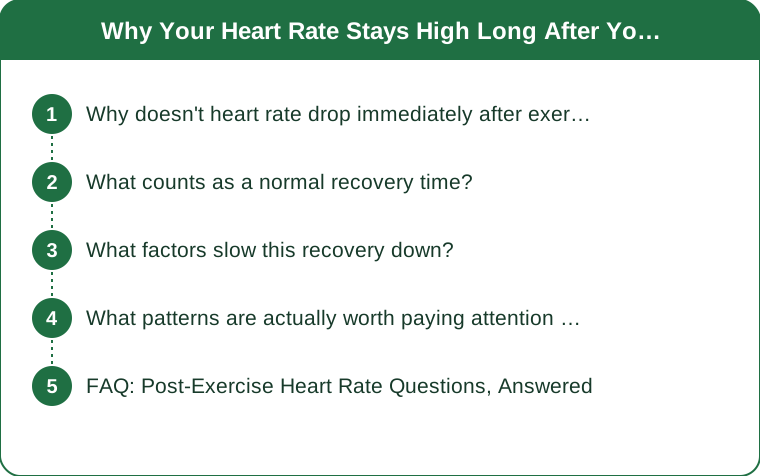
Why doesn’t heart rate drop immediately after exercise stops?
Because your body needs time to clear metabolic byproducts like lactate and to cool core temperature back down, and your heart continues working harder to support that recovery process even after movement stops.
This recovery period, often called heart rate recovery (HRR), is actually used as a fitness marker — how fast your heart rate drops in the first 1-2 minutes post-exercise correlates with cardiovascular fitness.
What counts as a normal recovery time?
A drop of 12-20+ beats per minute within the first minute after stopping is considered a healthy heart rate recovery response in most research on the topic.
Full return to near-resting heart rate typically takes 10-20 minutes after moderate-to-high intensity exercise, longer in hot or humid conditions since your body is also working to cool down, not just recover from exertion.

What factors slow this recovery down?
Heat, dehydration, caffeine, and higher exercise intensity all extend recovery time — none of these are dangerous on their own, but they explain why the same workout can leave your heart rate elevated longer on a hot day versus a cool one.
Poor sleep and high stress levels the day of a workout can also blunt heart rate recovery, since your nervous system is already running in a more activated state before you even start exercising.
What patterns are actually worth paying attention to?
A heart rate recovery of less than 12 beats per minute drop in the first minute has been associated in research with higher cardiovascular risk over time and is worth discussing with a doctor if consistently observed.
Also worth flagging: heart rate staying elevated for 30+ minutes paired with dizziness, chest pain, or unusual shortness of breath — that combination warrants prompt medical attention rather than waiting it out.
FAQ: Post-Exercise Heart Rate Questions, Answered
Does fitness level change how fast heart rate recovers?
Yes significantly — more cardiovascularly fit individuals typically show faster heart rate recovery, making it a useful metric to track improvement over months of training.
Can anxiety alone keep heart rate elevated after a workout?
Yes — post-exercise anxiety or stress can keep heart rate elevated independent of physical recovery, especially if you’re also monitoring the number itself, which can create a feedback loop.
Should I be worried if this only happens occasionally?
An occasional slow recovery tied to heat, poor sleep, or unusually intense effort isn’t typically concerning — a consistent pattern across many sessions is the more meaningful signal.
TL;DR:
- Heart rate elevated for 10-20 minutes post-exercise is generally normal, longer in heat
- Faster heart rate recovery (a bigger drop in the first minute) is linked to better cardiovascular fitness
- Heat, dehydration, caffeine, and poor sleep all extend recovery time
- Elevated heart rate for 30+ minutes with dizziness or chest discomfort warrants medical attention
Next workout, time how long it takes your heart rate to settle — a consistent pattern tells you more than any single session.
Keep Reading
This article is for general informational purposes only and is not medical advice. Always consult a qualified health professional for guidance specific to you.