Heart Health for Women: The Facts, the Habits and the Symptoms Nobody Told You
Quick quiz: what is the number one killer of women? Not breast cancer — heart disease, by a wide margin, claiming more women’s lives than all cancers combined. Yet women chronically underestimate their risk, and — more dangerously — women’s heart attacks often look nothing like the movie version. The good news is proportionally big: an estimated 80% of cardiovascular disease is preventable through daily habits. Here are the facts, the habits, and the symptoms every woman should know cold. (Informational — your own numbers and symptoms belong with a doctor, promptly.)

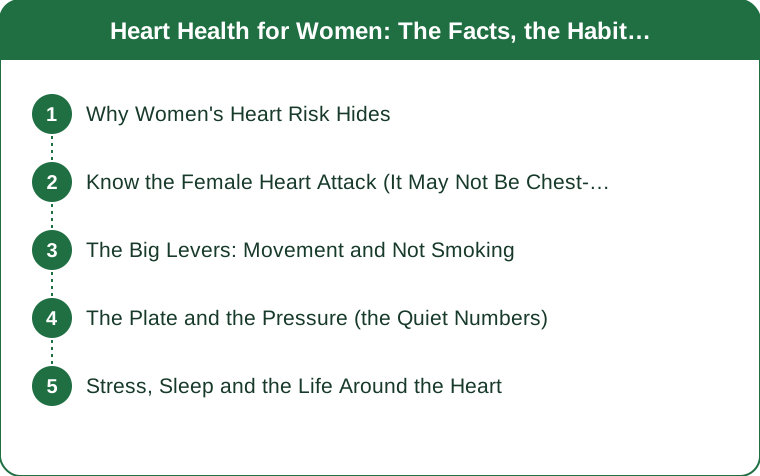
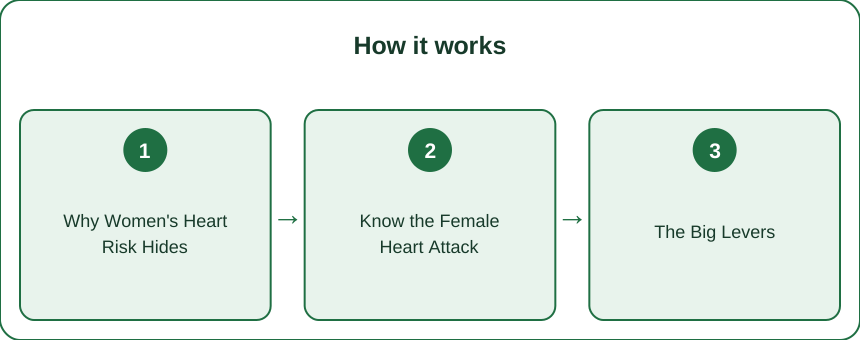
Why Women’s Heart Risk Hides
The awareness gap has structural causes: heart research historically studied men, women’s risk accelerates after menopause just as attention drifts elsewhere, and conditions unique to women’s health — preeclampsia, gestational diabetes, early menopause, PCOS — quietly raise lifetime cardiac risk without anyone connecting the dots. Meanwhile women’s symptoms get misattributed to anxiety or stress at documented rates men’s do not. The correction starts with the fact itself: heart disease is a women’s issue — arguably the women’s health issue — and treating it that way changes screening, habits and urgency.
Know the Female Heart Attack (It May Not Be Chest-Clutching)
Women can and do get classic crushing chest pain — but they are far more likely than men to present with the other list: unusual crushing fatigue (days or weeks before), shortness of breath without exertion, pain in the jaw, neck, back or arms, nausea, cold sweats, and pressure that feels like heartburn or a pulled muscle. Many women describe something is very wrong more than pain. The rule that saves lives: sudden unexplained symptoms from this list — especially clustered — mean emergency services, not a nap and a wait. Women delay calling for themselves at famous rates. Do not be famous that way.

The Big Levers: Movement and Not Smoking
The two heavyweights, in evidence order: regular activity — the standard 150 minutes of moderate movement weekly (a brisk 30-minute walk, five days) lowers cardiovascular risk substantially, strengthens the heart muscle directly, and improves blood pressure, cholesterol and blood sugar in one habit; brisk walking is genuinely sufficient, and adding two strength sessions helps further. And smoking: the single worst thing a heart can be handed — women who smoke carry even higher relative cardiac risk than men who do — while quitting begins repaying within weeks and halves excess risk within years. Everything else in this article is negotiable by comparison.
The Plate and the Pressure (the Quiet Numbers)
Heart-plate guidance has converged on the Mediterranean pattern: olive oil, fish twice weekly, legumes, vegetables at volume, minimal processed meat and added sugar — trial-tested to cut cardiovascular events. Sodium matters mostly via processed food, not the salt shaker. Then the numbers women skip: blood pressure (the silent one — high BP often feels like nothing while doing damage; know yours, and home cuffs are cheap), cholesterol panel, blood sugar, and waist measurement. An annual physical that produces those four numbers converts heart health from vague virtue into a dashboard. Dashboards get managed.
Stress, Sleep and the Life Around the Heart
The connections research keeps strengthening: chronic stress and poor sleep are independent cardiac risk factors — short sleep associates with hypertension and heart disease, and the stress-heart pathway (cortisol, inflammation, blood pressure) is direct enough that stress management belongs in cardiac prevention, not the wellness margins. The prescriptions overlap beautifully with everything else in a good life: 7–8 hours of sleep defended, movement (again — it is also a stress drug), social connection (loneliness carries measurable cardiac cost), and for women in the menopause transition — a key risk window — an actual conversation with a clinician about the whole picture. The heart, it turns out, keeps score of the entire life.
Heart health for women, on one card: know the female symptom list cold, walk briskly most days, do not smoke, eat Mediterranean-ish, learn your four numbers this year, and defend sleep like the cardiac intervention it is. Heart disease may be the top killer of women, but it is the most preventable thing on the list — 80% is a number worth taking personally. Book the physical. Take the walk. Both today, ideally.
Keep Reading
This article is for general informational purposes only and is not medical advice. Always consult a qualified health professional for guidance specific to you.